



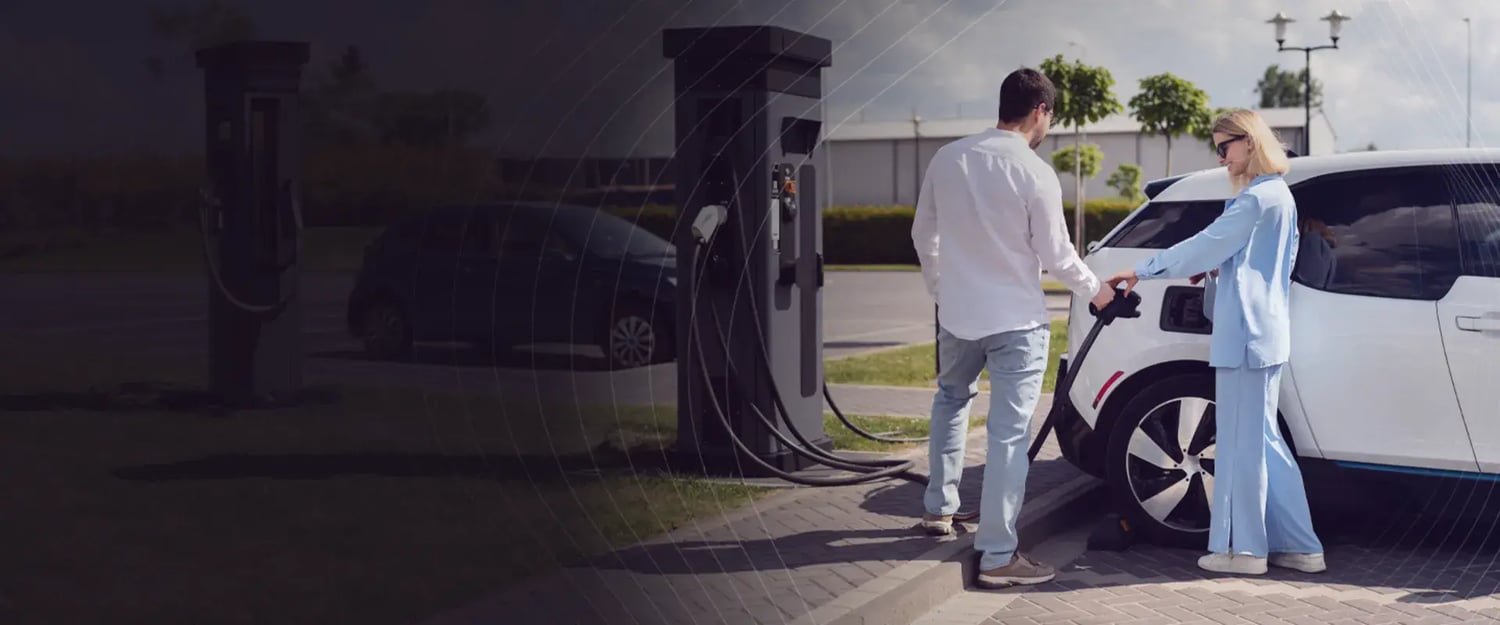

To most EV drivers, Plug and Charge feels effortless: connect the cable, watch the session start and forget about apps or RFID cards. But behind this simplicity lies a complex reality the industry rarely talks about. Plug and Charge isn’t powered by magic. It’s powered by trust.
Interoperability is not the same as trust
Earlier in 2025, a joint announcement by Irdeto, Gireve and Hubject marked an important milestone by enabling pool interoperability across ecosystems, demonstrating what collaboration can unlock at scale. However, true interoperability still requires deep cryptographic trust relationships between Public Key Infrastructure (PKI) operators, not just connectivity. A common misconception is that because Plug and Charge pools can share information, the ecosystem is already interoperable. In practice, pool-to-pool communication does not equal PKI interoperability.
Even the upcoming Certificate Trust List (CTL) under the SAE EVPKI program or the European Commission Sustainable Transport Forum (STF), expected between 2027 and 2028, won’t automatically solve this. A CTL validates which roots are trusted, but vehicles and chargers still need to implement it and enforce those policies consistently. Without that, trust remains fragmented.
PKI is the real engine behind Plug and Charge
PKI does more than secure messages and communication. It enables trust across players that rarely interact directly: vehicle manufacturers, EVs, charge point operators and mobility service providers. Every session requires invisible checks to authenticate the charger, validate the driver’s contract and ensure that backend systems can exchange information securely.
A good way to imagine this is that the charger presents its certificate like a passport, and the EV acts as border control. If the certificate cannot be validated against a known root, nothing begins. With ISO 15118-20, the system moves toward mutual authentication, requiring both sides to prove their identity. This shift comes from the move to TLS 1.3, which replaces the slower, one-way handshake of earlier versions with a faster and more secure process, strengthening the trust layer compared to ISO 15118-2.
When trust breaks, users pay the price
Trust failures create very real problems for end users. Some technologies introduced to simplify seamless charging, such as AutoCharge, rely on unstable identifiers rather than authenticated interactions. Because these systems blindly trust the device that connects, they are vulnerable to errors and misuse. When identifiers like IP addresses or VINs shift or are reused, which happens when OEMs rotate IPs or when multiple vehicles share the same identifier, the result can be misbilling, with drivers receiving charges for sessions they never initiated.
RFID-based authentication exposes another weakness. Because tokens can be cloned, the same credential can be used simultaneously across different locations, leading to financial losses for operators and confusion for drivers.
Multiple roots strengthen the market, but only with the right trust model
A future-proof market needs more than one trust anchor. Multiple V2G roots, multiple pool operators and multiple certificate policies encourage competition, innovation and resilience. A single-root ecosystem creates a single point of failure and reduces market openness.
However, more roots mean more trust relationships. The ideal trust model requires ecosystems to exchange V2G roots, synchronize contract certificates and agree on strict service levels for responding to each other. This is not a technology blocker but a gap in shared processes. For example, today’s recommended approach uses a single “source of truth” for contract certificates: they must be stored with the pool linked to the vehicle’s OEM, ensuring consistency across ecosystems.
The missing piece: governance and long-term alignment
Regulations like AFIR will push ISO 15118 adoption for EV charging, but standardization alone doesn’t create trust. What’s still missing is a governance layer to align certificate policies, define interoperability rules and validate cross-domain trust relationships.
Future phases of interoperability depend on consistent onboarding rules for new participants, synchronized contract states and operational alignment between ecosystems. These are not technology issues; they are coordination and operational issues.
The takeaway: trust-first design benefits everyone, especially drivers
The ideal Plug and Charge ecosystem is one where trust is open, neutral and fully interoperable. When ecosystems adopt this model, end users benefit first. They get seamless charging sessions, accurate billing and a consistent experience across networks and borders.
But the ecosystem benefits too. Charge point operators gain resilience, service providers operate more efficiently, vehicle manufacturers reduce support complexity and the overall market grows stronger and more innovative.
The closer we get to a trust-first, interoperable future, the more the entire EV landscape accelerates toward user-friendly, secure and scalable mobility.
If you’d like to explore this vision in more depth, contact us to have a conversation and visit our website for additional insights: Irdeto CrossCharge.






/Images/Module%20-%20footer/spiral.svg)


